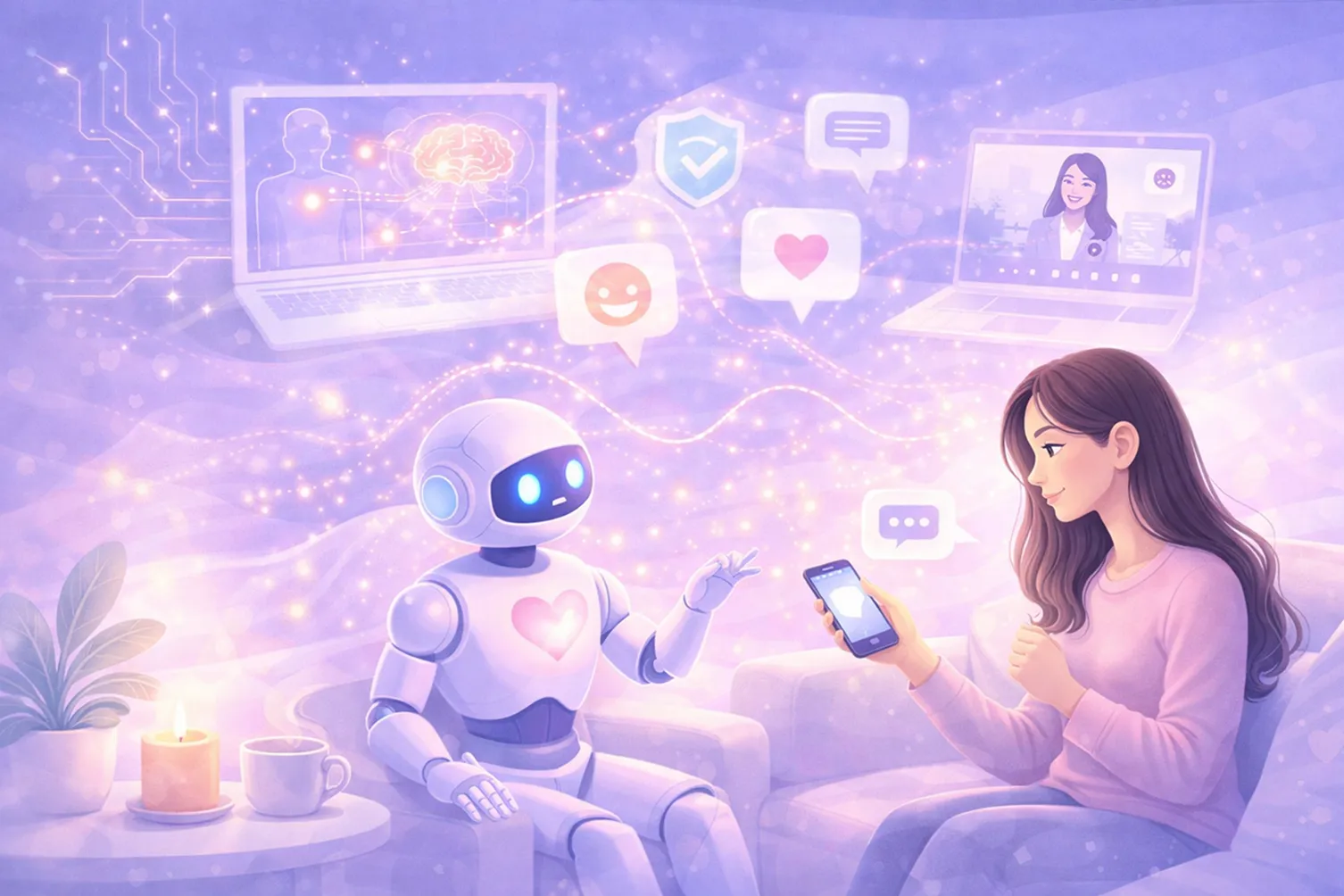
In an era where technology often feels like the source of our stress, a surprising ally is emerging: Artificial Intelligence. While nothing replaces the human connection of traditional therapy, AI is filling critical gaps in our mental healthcare system, making support more accessible, immediate, and personalised than ever before.
The biggest hurdle to mental health care is often the "wait and see" period. AI powered chatbots and apps provide a vital bridge for those in immediate distress, using Natural Language Processing to offer evidence-based techniques like Cognitive Behavioural Therapy at any hour of the night. For many, the anonymity of a digital interface lowers the social barrier to opening up about sensitive issues, providing a safe space to vent without fear of judgment.
Beyond immediate support, AI excels at spotting what the human eye might miss by analysing patterns in speech, sleep data, or even digital habits. These "digital biomarkers" can identify early warning signs of depression or burnout before a crisis occurs, allowing for proactive intervention. Furthermore, AI helps personalise the path to recovery. By processing vast amounts of data, it can help clinicians determine which treatment plans or medications are most likely to work for a specific individual, significantly reducing the frustrating "trial and error" phase of mental health care.
Ultimately, AI isn't here to replace therapists; it is here to empower them. By handling routine monitoring and data analysis, AI allows practitioners to focus on the deep, empathetic work that only humans can do. As we move forward, this partnership promises a future where mental health support is no longer a luxury or a scheduled appointment, but a constant, supportive presence woven into our daily lives.
How AI is transforming mental health support:
- 24/7 Emotional Assistance: AI companions allow users to talk, reflect, and reset at any time of the day.
- Personalised Wellbeing Tools: Modern apps analyse mood patterns and suggest breathing, journaling, or relaxation exercises.
- Early Stress Awareness: AI systems can notice emotional changes before stress becomes overwhelming.
- More Accessible Care: Digital support makes mental health tools available to people everywhere.
- Human + AI Together: AI does not replace therapists but supports daily emotional wellbeing.